You Can Maintain a Proper Following Distance by
Every year, more than 500,000 trucks are involved in crashes. Of those collisions, according to the Federal Motor Carrier Condom Assistants (FMCSA), about 22% are the direct outcome of the commercial vehicle driver post-obit the motorcar in forepart of them too closely. To break that down, that's more than 25,000 crashes that could have been avoided simply past maintaining a proper following distance. Of course, it'southward not just large trucks that are guilty of tailgating. Rear-finish collisions are responsible for 29% of all vehicle crashes nationwide. These crashes are frequently indicative of vehicles tailgating and ignoring the most fundamental principles of The Smith5Keys®: allowing adequate space to maneuver away from potential conflict and giving drivers enough time to react to any driving environment. The fact is, many rear-end collisions can be avoided entirely past eliminating the practice of tailgating. To exist able to change this type of driving beliefs, it's important to first sympathize the behavior and thought processes that lead to drivers keeping an unsafe following distance. Many drivers believe that keeping a shut following distance gives them an advantage. In high-traffic situations, following closely behind some other vehicle allows them to go along other drivers from cutting them off, therefore, getting to their destination quicker. However, studies prove that it's exactly this kind of thinking that leads to rear-end collisions. Adding to the problem is that what qualifies equally a safe following distance can vary greatly from ane commuter to the next. A distance that seems perfectly condom to i driver tin can seem too shut to the next. While it is common for drivers to equate following distance with stopping distance, they're non actually the aforementioned matter. To exist able to stop in fourth dimension, drivers demand to be able to identify potential hazards and react to them. When drivers have a proper post-obit altitude, it gives them an reward of ameliorate visibility, which allows them to see farther ahead and anticipate or react to the situation equally needed. When a driver is following another vehicle likewise closely, it changes what he is able to focus on. Because the commuter hasn't given himself adequate space and time betwixt the car in forepart of him, he knows that he could rear-cease the vehicle if it stops of a sudden. This concern draws all his attending to that car, as he is focused on making sure the driver doesn't of a sudden hit his brakes. When the commuter's focus is on the vehicle in front of him, the commuter is going to miss many other things happening on the route around him. As taught in The Smith5Keys, "aiming high" and seeing "the big motion picture" are key to safety, and unsafe following distances doesn't permit the driver to encounter much across the vehicle that he is focused on. The larger the vehicle, the greater the following distance should be. Smith Arrangement's programme advises that drivers in modest- and mid-size vehicles allow a minimum following distance of 4 seconds. For drivers of larger vehicles, that distance should increase by some other second or 2, and in that location should also be a greater following distance when weather or road conditions are not optimal. To make up one's mind what their post-obit distance should be, drivers can cull a stationary object, such as a parked vehicle or a sign, and then count the seconds from the fourth dimension the vehicle in forepart passes that object until the front of their own vehicle reaches that same landmark. Past adopting a four-2d-minimum rule, drivers are giving themselves more fourth dimension, greater awareness and less stress. Fleet safe managers can improve the safety of their drivers by providing education and reminders about safe following distances. Unlike elements such as road weather condition, bad weather condition or other drivers on the route around them, following altitude is something that every driver can control. Through preparation, drivers can learn how to better handle the situations that lead to tailgating. Proper post-obit altitude isn't about driving slowly, information technology's about driving smarter. For example, a driver cannot drive faster than the vehicle in forepart. The driver can choose to bulldoze the same speed too close or drive the same speed four seconds back. If the tailgating is the result of the vehicle in front of them going too slow, drivers should be taught to pass the vehicle — rather than tailgating them in hopes of making a point. If the professional driver finds himself being tailgated, he should find a way to permit the other vehicle safely pass them. At the aforementioned time, he should increase the distance between his vehicle and the one in front of him to avoid a multi-car collision. Maintaining a rubber following altitude is a topic that may need to exist revisited with drivers more than oft than other driving behaviors. One way to know if any drivers in your fleet need additional preparation in this area is through the use of telematics. Telematics provides safety managers with targeted and specific information on how a commuter behaves behind the bike, as it records speed, fuel usage, idling trends, and hard braking. If yous identify that hard braking is a repeated behavior, there's a very good hazard that the commuter is non practicing a prophylactic post-obit distance. Using the data provided by your telematics system, you can see which driving habits need to exist corrected. It can also help guide your decisions of what kind of training is needed for each individual driver to brand sure that any behind-the-bicycle habits that need improvement are being addressed. With so many risks associated with tailgating and dangerous following distances, investing in avant-garde commuter grooming tin salve time, coin, and lives. 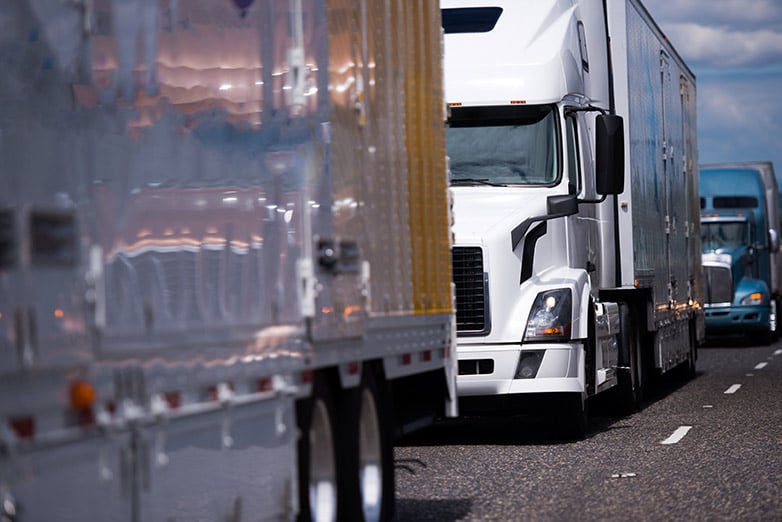
Why Following Distances Are Ignored
How to Determine the Proper Post-obit Distance
Encouraging Prophylactic Post-obit Distances
Making Safety Post-obit Distance Part of Your Condom Culture
tannerthawased1949.blogspot.com
Source: https://blog.drivedifferent.com/blog/are-your-drivers-maintaining-proper-following-distance

Post a Comment for "You Can Maintain a Proper Following Distance by"